
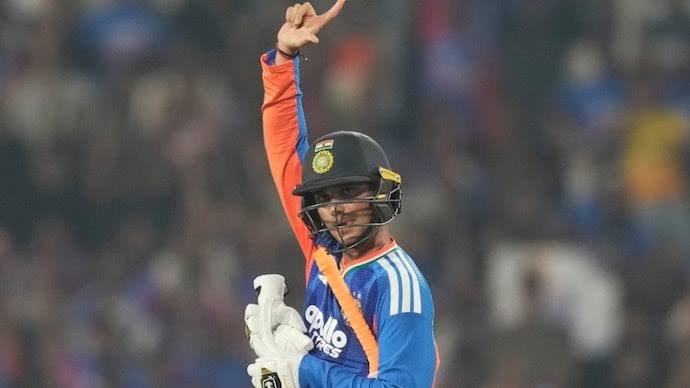
Sunil Gavaskar Explains Why Abhishek Sharma’s Performance Is Not Acceptable
In the wake of the defeat, Sunil Gavaskar emphasized the necessity for Indian batters to exhibit a higher level of responsability during the chase innings. The former captain of India provided his perspective on the team’s batting strategy, emphasizing that the team must enhance its pursuing strategy in order to achieve success at the highest level.
On October 14, 2026, India was defeated by the West Indies by 24 runs in the fourth T20I, which was played in Hyderabad. India achieved a score of 223 in their pursuit, while the West Indies scored 247 for three. The series was leveled at 2-2 following the loss, and a decider is scheduled for Bengaluru on October 17.
Sunil Gavaskar identified the team’s anticipated standard and the specific conditions as causes for concern.
He observed that the recent World Cup victory of India should be translated into dominate batting performances when the circumstances necessitate them.
Sanju Samson’s 56 off 23 balls was instrumental in India’s promising commencement. Nevertheless, Sunil Gavaskar believed that the remaining batters were unable to build upon this foundation. Noting that the young batter’s performance did not meet expectations, he explicitly discussed Abhishek Sharma’s involvement in the match.
Keemo Paul was the most outstanding bowler for the West Indies, securing five wickets during the match. Sunil Gavaskar acknowledged the bowling challenges that India encountered, but he framed them within the context of the team’s overall performance expectations. He observed that the inexperienced bowlers would need to learn from being struck for boundaries rather than being protected.
Also Read : Kuldeep Yadav Deserves a Chance in 5th T20I, Says Varun Aaron
Sunil Gavaskar contrasted his approach with that of West Indies batsman Alick Athanaze, who exhibited controlled aggression throughout the series. The former captain emphasized that Athanaze’s shot selection and technique enabled him to score rapidly without assuming an excessive amount of risk, thereby demonstrating a model of disciplined batting that India’s middle order lacked during the match.
